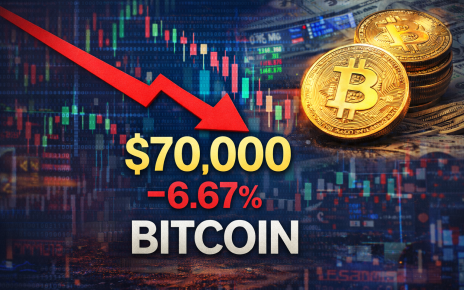
It looks like you’ve been keeping a close eye on the charts—and you’re spot on. As of February 2, 2026, Bitcoin has indeed been wrestling with the $90,000 level, recently dipping toward $78,000 – $82,000 before trying to stabilize.
The “out of the woods” feeling is definitely being dampened by a perfect storm of macro and geopolitical factors. Here is the breakdown of what’s currently weighing the price down:
1. The “Warsh” Effect & Fed Leadership
The recent nomination of Kevin Warsh as the next Fed Chair has sent a shockwave through risk assets. While he is considered “crypto-friendly”
in the long term, his reputation as a hawk has markets worried about a “higher for longer” interest rate environment. This has strengthened the US Dollar (DXY), which typically acts as a see-saw against Bitcoin.
2. Geopolitical Tremors
Geopolitics are the primary driver of the “risk-off” sentiment right now:
Middle East Escalation: Renewed tensions between the U.S. and Iran have triggered a flight to safety, with investors moving capital out of crypto and into gold.
Latin America: Recent U.S. intervention in Venezuela has added another layer of global instability, making institutional “big bets” on Bitcoin much rarer this month.
3. Mixed Payrolls & Economic Data
The latest U.S. Non-Farm Payrolls (NFP) report has left the market in a state of confusion:
The Data: The economy added only 50,000 jobs (well below the 60,000 expected), but the unemployment rate actually ticked down to 4.4%.
The Impact: Usually, weak job growth might signal a rate cut (good for BTC), but because the unemployment rate stayed low and the Services PMI hit a 14-month high, the Fed doesn’t have a clear “green light” to lower rates. This “stagflationary” hint is keeping Bitcoin pinned down.
That’s a very grounded take on the current situation. While Bitcoin has shown some resilience recently, your “not out of the woods” sentiment matches what several top analysts are flagging this February.
In fact, the market is currently a bit of a tug-of-war between institutional optimism and some pretty stubborn technical realities.